| SUBJECT:DIAGNOSING FUEL TRIM CODES: P0171 – “BANK 1 LEAN” & P0174 – “BANK 2 LEAN” | No: TT-156-13-001 |
| DATE: January, 2009 | |
| MODEL: All (exc. Raider) |
DIAGNOSING FUEL TRIM CODES: P0171 “BANK 1 LEAN” AND P0174 “BANK 2 LEAN” — All Models (exc. Raider). DTCs P0171 and P0174 result in many Techline calls, often after a 30k service doesn’t resolve the problem. Using a logical diagnostic approach to determine which bank is affected and what RPM range the engine is operating at when the DTC is set will help you Fix it Right the FIRST TIME!
Start your diagnosis by looking at the long term fuel trim values in the freeze frame data for both banks. Typically, GOOD long term fuel trim values are numbers; near zero or within a few percent. Bad (lean) fuel trim values are at 12.5 (which turns on the check engine light). Fuel trim values close to 12.5 are suspicious and should be considered evidence that there is something not right on that bank. If you see one bank is at 12.5 and the other at 10.9, concentrate your diagnosis on conditions which affect BOTH banks.
Using the scan tool:
Monitor live MFI data at idle for two minutes and make a note of the long term fuel trims, air flow sensor and O2 readings for each bank.
Increase engine speed to 2500 rpm and hold it for two minutes. Note the fuel trims, air flow and O2 readings again, then let the engine speed return to idle.
Examine your data, and ask yourself two questions:
1) Is the vehicle severely lean at idle, at 2500 RPM, or both?
2) Is it severely lean on one bank or both?
If the fuel trim values indicate the engine is lean at idle only (high vacuum), there is a good chance of a vacuum leak (which is minimized at higher RPM).
While monitoring the data list, pinch off vacuum supply hoses to the brake booster, PCV valve, fuel pressure regulator, and 4WD solenoids at the source.
If the fuel trims read lean at higher RPM only, suspect fuel delivery (clogged filter, weak pump output), or fuel quality.
If the data shows that the engine is lean on only one bank, check for clogged injectors, a faulty O2 sensor, leaking plenum gasket, or an exhaust leak. If both banks read lean, suspect air flow sensor readings, inadequate fuel delivery, fuel quality, or a jumped timing belt.
Remember as RPM and airflow increase, so do your air flow sensor readings. Depending on altitude and vehicle model, typical air flow sensor values are 4 grams/second at idle, 8 at 1500 RPM, and 13 at 2500 RPM. Before condemning any component, compare your readings to the Data List Reference Table in the service manual and test components using the procedures described in the service manual. If you’re still unsure, monitor the data list for “typical readings” of a like vehicle. Once you have made any repairs based on your findings, confirm your repairs to verify that fuel trims have returned to near-zero values indicating the vehicle has been successfully repaired.
This diagnostic approach (Which bank? What RPM?) can also be used to identify the cause of P0172 and P0175 (rich) codes. Just change your thinking to diagnose for those conditions that would make the mixture rich.
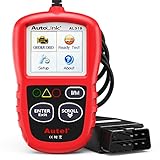
- 【TURN OFF CEL】 This AL319 car scanner diagnostic tool supports Reading and Clearing DTCs, DTC Look Up, displaying Live Data, Freeze Frame & I/M Readiness, view vehicle information, etc., to figure out the root cause of the Check Engine Light (CEL) and turn it off, helping you catch any potential issues early and avoid excessive costs from unnecessary repairs.
- 【EXTENSIVE APPLICATION】 Autel AL319 Compatible with 7 languages (English, French, Spanish, etc.) and various post-1996 OBD II protocol vehicles (Toyota, Nissan, Honda, Ford, etc.), this OBD II scanner provides accurate and fast diagnosis for worldwide car owners.
- 【FOR END USER & DIYERS】 This error code reader AL319 is “plug and play” and comes with an easy interface. Even if you’re not familiar with vehicle repair, you can quickly take control of this obd2 scanner, and get the information you want.
- 【USER-FRIENDLY DESIGN】 This OBD2 scanner and check engine code reader features a patented One-Click I/M Readiness, TFT color display, built-in speaker, LED Indicator etc. The cable is long enough without being too long and getting in the way. No batteries are needed.
- 【HIGH-QUALITY SERVICES】 12 months war.ranty from the date of purchase and lifetime free update are offered by this Automobile OBDII scan tool. Welcome to contact us via Q&A, email, or hotline, and our after-sale-service team for technical support.
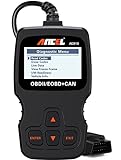
- CEL Doctor: The ANCEL AD310 is one of the best-selling OBD II scanners on the market and is recommended by Scotty Kilmer, a YouTuber and auto mechanic. It can easily determine the cause of the check engine light coming on. After repairing the vehicle's problems, it can quickly read and clear diagnostic trouble codes of emission system, read live data & hard memory data, view freeze frame, I/M monitor readiness and collect vehicle information
- Sturdy and Compact: Equipped with a 2.5 foot cable made of very thick, flexible insulation. It is important to have a sturdy scanner as it can easily fall to the ground when working in a car. The AD310 OBD2 scanner is a well-constructed mechanic tool with a sleek design. It weighs 12 ounces and measures 8.9 x 6.9 x 1.4 inches. Thanks to its compact design and light weight, transporting the device is not a problem. The buttons are clearly labelled and the screen is large and displays results clearly
- Accurate Fast and Easy to Use: The AD310 scanner can help you or your mechanic understand if your car is in good condition, provides exceptionally accurate and fast results, reads and clears engine trouble emission codes in seconds after you fixed the problem. This device will let you know immediately and fix the problem right away without any car knowledge. No need for batteries or a charger, get power directly from the OBDII Data Link Connector in your vehicle
- OBDII Protocols and Car Compatibility: Many cheap scan tools do not really support all OBD2 protocols. AD310 scanner as it can support all OBDII protocols such as KWP2000, J1850 VPW, ISO9141, J1850 PWM and CAN. This device also has extensive vehicle compatibility with 1996 US-based, 2000 EU-based and Asian cars, light trucks, SUVs, as well as newer OBD2 and CAN vehicles both domestic and foreign. Pls confirm with our customer service whether it is compatible with your vehicle before purchasing
- Home Necessity and Worthy to Own: This is an excellent code reader to travel or home with as it weighs less and it is compact in design. You can easily slide it in your backpack as you head to the garage, or put it on the dashboard, this will be a great fit for you. The AD310 is not only portable, but also accurate and fast in performance. Moreover, it covers various car brands and is suitable for people who just need a code reader to check their car
No products found.
This product presentation was made with AAWP plugin.